
How your neighborhood affects your car's paint in North Houston
Where you live in the North Houston metro shapes how your paint ages. It is not just about how often you wash or what products you use. Zip code matters. The tree cover in Spring Valley differs from the open canopy on FM 1488 near Magnolia. A truck sitting in a Kingwood cul-de-sac under a water oak is fighting a different battle than the same truck parked on an exposed lot near Highway 249 in Tomball. Understanding those differences is the first step toward a realistic protection plan.
This is not a theoretical concern. The corridors, green belts, neighborhoods, and road surfaces in Montgomery and Harris counties each introduce their own set of paint hazards. Knowing what you are up against helps you decide whether a basic maintenance program is sufficient or whether a harder barrier like film or a professional-grade coating is a smarter investment.
Tree canopy and organic contamination
Neighborhoods built around mature tree cover — places like The Woodlands, Kingwood, Spring, and Gleannloch Farms in Spring — are among the nicest places to park a car visually. They are also some of the most corrosive. Oak, sweetgum, and pine produce different types of sap and pollen depending on the season, and all of them can etch an unprotected clear coat if they sit through a heat cycle.
Bird activity follows tree density. More canopy means more roosting, and bird droppings are genuinely acidic. On a dark-colored vehicle parked outdoors in summer, a dropping can visibly etch clear coat in under an hour if the surface temperature climbs high enough. Tree sap can be even more persistent because it bonds with the paint rather than sitting on top of it.
The solution is not to avoid these neighborhoods. It is to either keep up with frequent decontamination washes or install a coating or film that creates a chemically resistant barrier between the contaminant and the paint. A properly cured professional ceramic coating will not prevent sap from landing on your hood, but it dramatically slows the etch process and makes removal safer and easier.
Open corridors, highway exposure, and rock chip risk
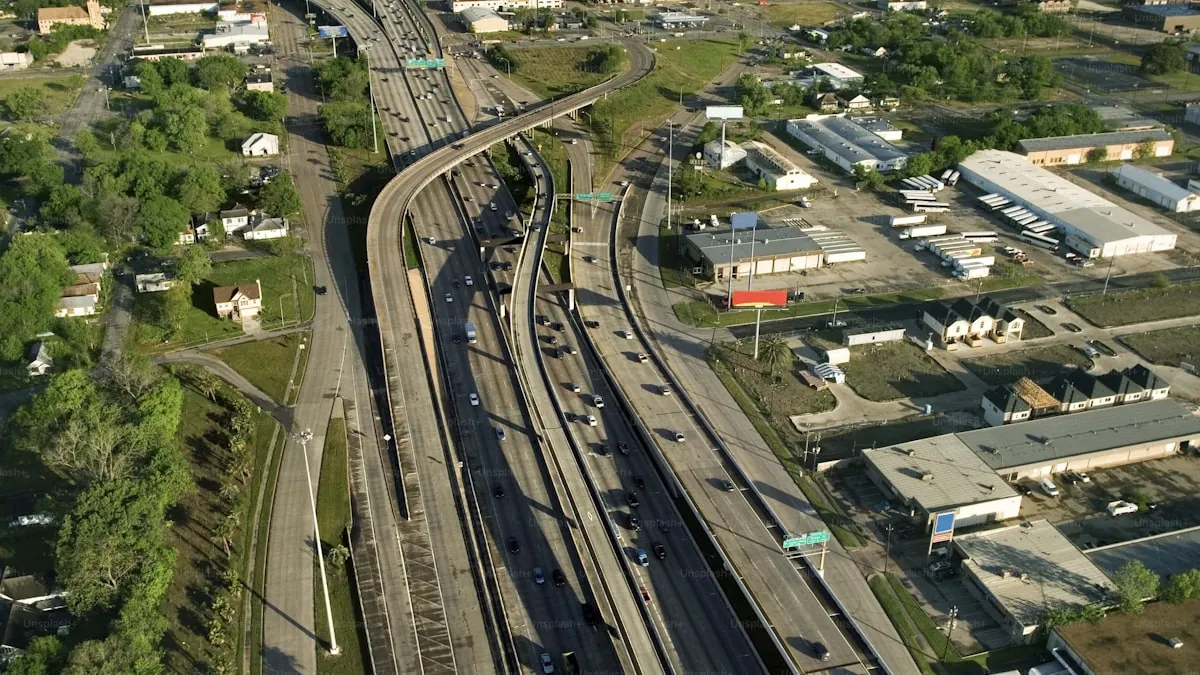
If you commute on Highway 249, the Grand Parkway 99 corridor, SH 99, or I-45 north toward Conroe, your vehicle faces a consistent source of mechanical damage that trees will never cause. Construction debris, gravel turnover from unpaved shoulders, and aggregate from commercial trucks are all factors on these routes.
Rock chips accumulate on the hood, front bumper, and leading edges of side mirrors. On a new vehicle, this damage starts immediately after delivery. Within the first year of highway commuting, an unprotected hood can accumulate dozens of chips that, left unsealed, eventually allow moisture to reach bare metal.
Residents commuting from Tomball, Cypress, Magnolia, and the areas north of Spring along 249 and the Aggie Expressway are in the higher-risk group for chip damage. Paint protection film applied to the full front — hood, fenders, bumper, mirrors — is the mechanical solution here. A ceramic coating provides chemical resistance but does not absorb impacts. Film does both.
Industrial and commercial proximity in south Tomball and Cypress
Parts of the Cypress and south Tomball corridor sit closer to industrial and commercial zones than residents sometimes realize. Fallout from brake dust and iron particulates from heavy vehicle traffic concentrates on surfaces parked within a few miles of heavily trafficked commercial routes. This is a particular problem for vehicles with lighter finishes — white, silver, pearl — where embedded iron contamination shows as subtle orange or brown speckling before it becomes visible to the untrained eye.
Iron fallout is not washed away by a standard car wash. It bonds to the clear coat chemically and requires a dedicated iron remover during decontamination. Vehicles that skip this step before applying any coating are sealing contamination beneath the product, which shortens the coating’s life and can cause long-term paint issues.
For drivers in these zones, the answer is regular decontamination — at minimum once or twice a year — and a coating that reduces how aggressively airborne particulates bond to the surface in the first place. A ceramic coating provides that resistance without changing the appearance of the paint.
Flooding, standing water, and mineral deposit buildup
North Houston’s water supply is moderately to heavily mineralized depending on your exact municipality, and the area floods with enough regularity that cars routinely roll through standing water, splash through flooded underpasses, and sit on wet concrete for extended periods. Hard water dries and leaves calcium and mineral deposits on horizontal surfaces that can bond tightly to clear coat.
This is most visible on dark vehicles — black, dark blue, charcoal — where dried water spots show clearly. But lighter vehicles accumulate the same deposits; they are simply harder to see until the paint starts to look dull. Repeated mineral deposit cycles without proper removal accelerate clear coat degradation over time.
For vehicles parked outdoors long-term in areas like Conroe, Humble, and the outer Woodlands townships — where afternoon thunderstorms are common and vehicles may not be dried after rain — this is a slow but consistent threat. A hydrophobic coating slows the bonding process because water beads and sheets off rather than sitting and evaporating in place.
What your parking situation tells you about protection priority
Garage-kept vehicles in neighborhoods like Imperial Oaks, Harmony, or Sienna Plantation face a different calculus than a vehicle parked in an uncovered lot or driveway. If you have a covered garage and park your vehicle every night, your environmental exposure is significantly compressed. Your priority shifts from barrier protection against rain and UV to occasional decontamination and maintaining gloss.
If your vehicle lives outdoors full-time — whether that is a work truck on a commercial property in northwest Tomball, a second vehicle in an overflow driveway in Magnolia, or an SUV left at a park-and-ride near Cypress — the exposure is continuous. UV degradation, rain minerals, fallout, and organic contamination accumulate daily. In those scenarios, the cost of professional protection becomes easier to justify against the cost of paint correction or repaint two years down the road.
The right protection strategy is not one-size-fits-all. It depends on where you park, how far you commute, what roads you use, and how much tree cover surrounds your vehicle. The starting point is an honest assessment of those factors before deciding on a service.
Getting the right evaluation for your situation
The most common mistake North Houston owners make is buying protection reactively — after they notice paint damage — rather than proactively. A paint correction appointment can restore a lot of what time and environment take away, but it involves removing material from the clear coat, and there is only so much of that to work with before the paint is genuinely compromised.
If you are uncertain about what your vehicle actually needs given your neighborhood, commute, and parking situation, a direct conversation with an experienced installer is the most efficient path. You can reach EuroLuxe Detailing at (936) 292-6056 to discuss your specific situation before committing to any service.
Protection decisions should follow from an honest look at how your car lives, not from a general assumption that all vehicles in the region face the same conditions. They do not. North Houston is a large, varied area, and where you are in it matters more than most owners expect.