Why paint correction results on dark cars depend on lighting
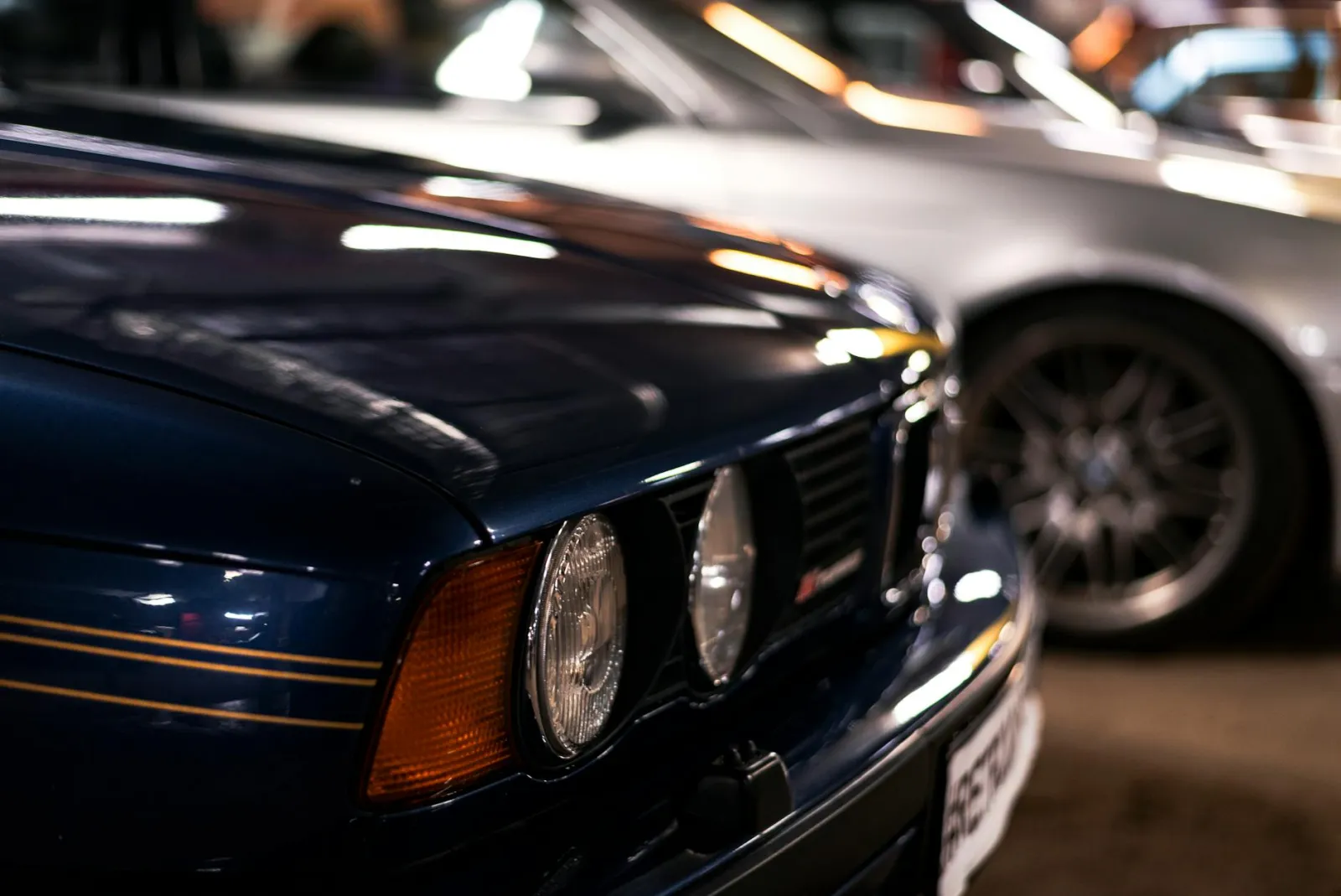
Dark paint is unforgiving. Black, dark blue, gunmetal, and deep charcoal finishes expose every swirl mark, buffer trail, and water spot that lighter colors hide in plain daylight. Owners of these vehicles often know something is wrong but cannot fully describe it until a technician puts a focused light source on the panel. The problem is not cosmetic vanity — it is physics. Dark pigments absorb light rather than scatter it, which means surface defects in the clear coat produce sharp, high-contrast reflections that stand out distinctly against the deep background.
Paint correction on dark vehicles is both the most rewarding and the most demanding work in the shop. The process is slower, the lighting requirements are stricter, and the margin for error is tighter. Understanding why lighting drives every decision in this process helps vehicle owners evaluate what they are actually paying for and why the results look so different from what they saw in a parking lot.
What your clear coat actually contains
The top layer of modern automotive paint is a clear coat — a transparent polyurethane or urethane-based film applied over the color base coat. It is typically 50 to 100 microns thick, and it carries the gloss, depth, and reflective quality of the finish. It also receives every insult: car wash brushes, improper drying towels, drive-through sprayers, and fingernails dragging across the surface.
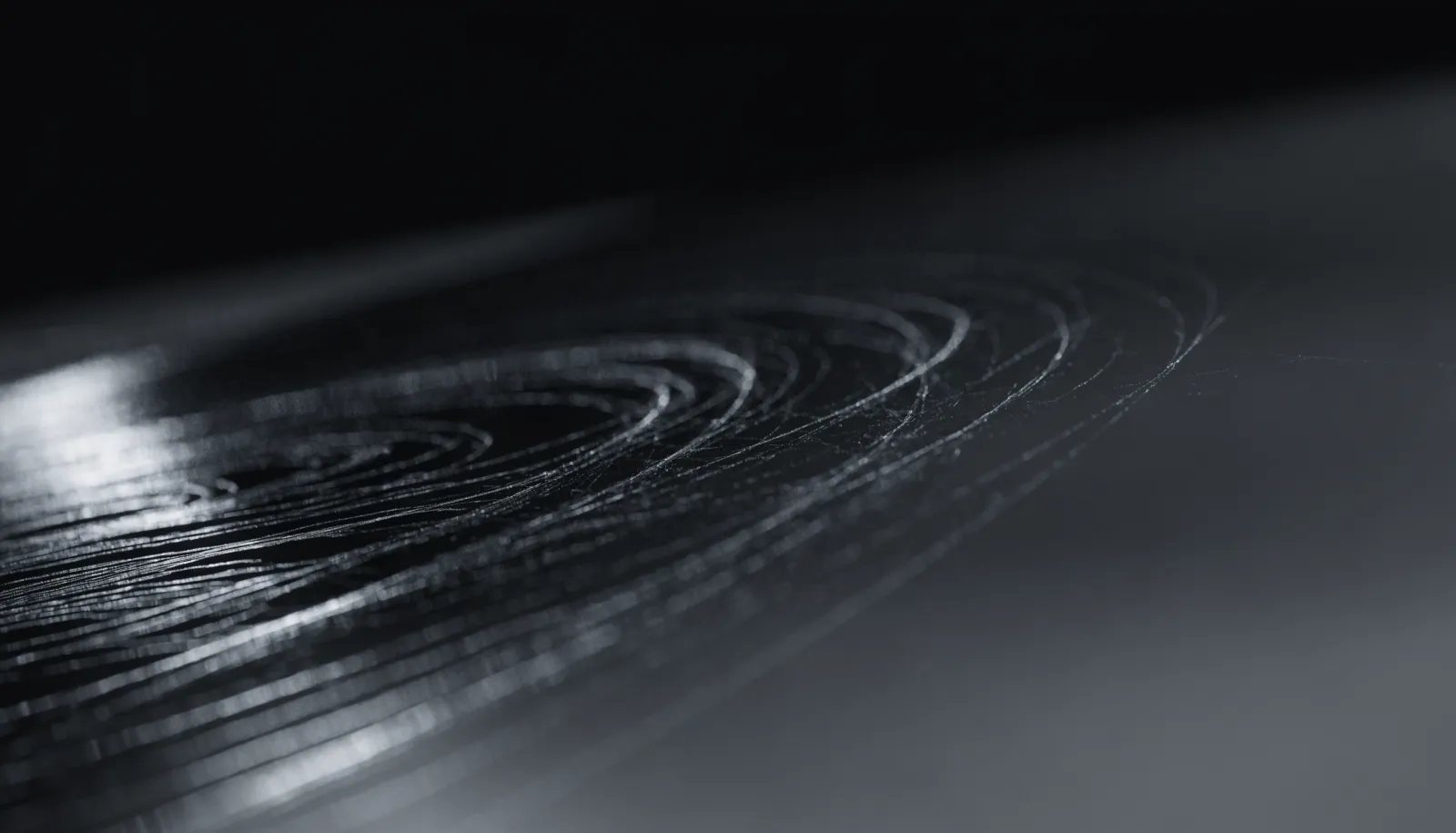
Those insults leave behind microscopic scratches and abrasion patterns in the clear coat. On a white or silver vehicle, the scratches diffuse light broadly and often appear as a dull haze. On a dark vehicle, those same scratches create bright, swirling reflections against a near-black background. The effect is amplified further by gloss — the glossier the finish, the sharper the contrast between an undamaged area and a scratched one.
Paint correction addresses this by removing a controlled amount of clear coat material to level the surface. The scratches do not fill in; the surrounding paint comes down to meet the bottom of the scratch, producing a flat, optically smooth surface that no longer scatters light chaotically.
Why lighting is the primary diagnostic tool
Before any machine polishing begins, the technician needs to understand the full picture of what the paint contains. Standard ambient light — overhead fluorescents, open-bay daylight, or showroom LEDs — will not reveal everything. Shallow swirl marks and light marring often disappear completely in diffuse lighting, only to reappear under a direct, focused source.
The tools used in professional assessment include fixed LED inspection lights, handheld swirl finders, and rotatable light bars that cast raking light across a panel at low angles. A raking light source — one positioned nearly parallel to the surface rather than perpendicular to it — catches the edges of surface scratches and projects them into visibility. This is called oblique or tangential lighting, and it is the same principle photographers use to reveal texture in a flat subject.
Dark cars require more time in the assessment phase because defects at different depths respond differently. Heavy scratches catching raking light from one angle may vanish when the angle changes, which tells the technician they are shallower than they appear. Buffer holograms — fine, cyclical swirl patterns left by improper machine polishing — often only appear under single-point, high-intensity light and disappear in mixed ambient conditions. You can walk out of a shop thinking the job is done and discover a panel full of holograms the moment you park under a gas station canopy.
The correction process on dark paint
Once the assessment is complete, the technician selects a combination of machine, pad, and compound appropriate to the defect depth. Deeper scratches require a more aggressive cut — a compound with coarser abrasive particles, often paired with a firm foam or microfiber cutting pad on a dual-action or rotary polisher. Lighter swirl marks and marring respond to a finishing polish with a soft foam pad.
On dark vehicles, each stage of correction is verified under inspection lighting before moving to the next. There is no shortcut here. A single pass with the wrong combination can introduce new holograms or compound hazing that requires an additional correction step to remove. The temptation on dark paint is to use an aggressive compound to speed up the process — the danger is leaving behind micro-scratches from the compound itself that require a separate finishing stage to address.
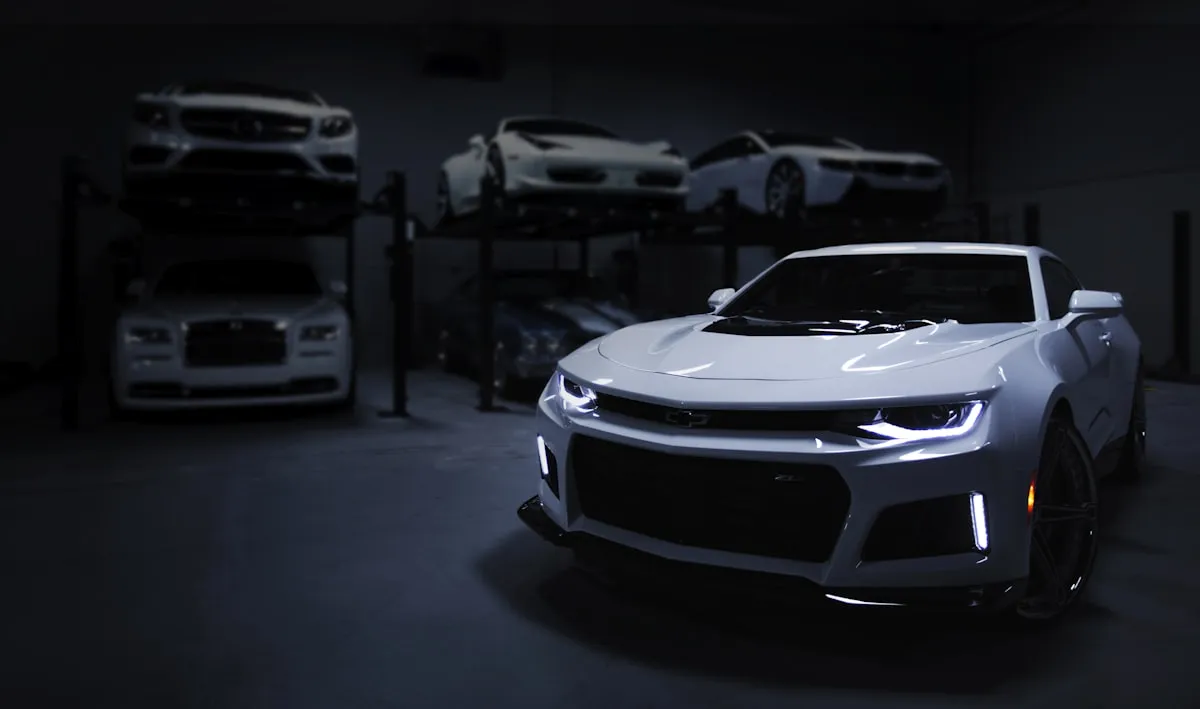
EuroLuxe uses a climate-controlled installation bay, which matters for paint correction beyond just comfort. Ambient temperature affects how compounds cure and how long a polishing lubricant remains workable on the panel. High humidity can interfere with surface inspection and slow the flashing of certain compounds. Consistent conditions reduce variables and produce more predictable results across every panel.
If you are planning to follow paint correction with a ceramic coating, the correction work must be completed, inspected, and confirmed clean before any coating is applied. Locking defects under a ceramic layer means they stay there for the life of the coating. The coating will make the paint easier to maintain, but it will also amplify those defects under light — the same physics that makes dark paint reveal swirls will make coated dark paint reveal anything left behind from correction.
What defects can and cannot be removed
Not every mark in a dark finish is correctable through machine polishing. The key question is whether the damage penetrates through the clear coat into the base coat below. Scratches that reach the base coat expose color pigment or primer and cannot be polished away — they require spot repainting. A skilled technician can usually determine this with a paint thickness gauge and a close inspection under focused light, though a test spot with a mild compound often gives the most reliable answer.
Surface-level defects that sit within the clear coat — swirl marks, light scratches from improper washing, water spot etching, oxidation beginning at the surface — are candidates for correction. The depth of the correction depends on how aggressively the paint has been scratched and how much clear coat material remains. Thin clear coats, common on some European and Japanese vehicles, limit how aggressively you can correct without risking burn-through.
For owners considering paint protection film after correction, it is worth knowing that PPF will not hide underlying defects on dark paint either. The film is optically clear, and any swirl marks or scratches left uncorrected before installation will remain visible through the film under certain lighting. Correct first, protect second — the sequence matters on every color, and it matters most on dark paint.
Reading results in real-world conditions
One of the most common surprises owners report after paint correction is that the results look different in different environments. A panel that looked perfect under shop lighting may show trace marring under a midday sun at a certain angle, or vice versa. This is normal. No paint surface is optically perfect at the nano scale, and lighting conditions vary enormously in the real world.
What a proper correction should eliminate is the systematic, directional swirl pattern that reads as a dull haze or circular marring under most lighting. Random, non-directional micro-texture from abrasive compounds should be removed in a final finishing stage, leaving behind a surface that reads uniformly glossy across all common lighting conditions. The best way to verify this before leaving a shop is to walk the vehicle under several different light sources — shop lighting, direct sun from multiple angles, and a focused handheld light — and confirm the panel is consistent.
If you own a dark-colored vehicle in the North Houston area and you are trying to understand what your paint actually needs, a professional assessment before committing to any service is a reasonable first step. Call EuroLuxe at (936) 292-6056 to schedule an inspection and get a straightforward answer about what correction will accomplish for your specific finish.
Dark paint rewards proper care more than any other color category. The same surface properties that make every flaw visible also make a fully corrected, properly maintained finish look deeper and more dimensional than almost anything else on the road. Getting there requires the right process, the right lighting, and enough patience to do the work in stages rather than rushing toward a result.