Paint correction on granite and dark silver cars: what to expect
Granite gray, dark silver, and charcoal metallic finishes are among the most popular colors on the road right now, and for understandable reasons. They photograph well, they read as premium, and they hide dirt between washes better than black or white. What they do not hide is paint defects. Under direct sunlight or a halogen work light, a dark silver hood covered in swirl marks looks like a television with bad reception. The metallic flake in the basecoat catches light from every angle, and every fine scratch, buffer trail, or wash-induced abrasion becomes visible from ten feet away.
This is the trade-off owners rarely hear about when they choose the color. Dark silver is often described as low-maintenance because light dust does not show. That is true at a car wash. It is the opposite of true in a detail bay. When someone brings us a three-year-old Mercedes GLE in selenite gray or a dark gray Tacoma that has been through a tunnel wash twice a month, the paint condition is usually worse than the owner expects once we put a light on it.
Understanding why these finishes behave this way, and what a proper paint correction actually does to address it, helps owners make better decisions before they commit to a service.
Why dark metallic paint shows defects so clearly
The visual drama comes down to how metallic basecoats reflect light. In a solid color like pearl white, the pigment reflects light relatively uniformly. The clear coat over it either looks clean or looks hazy, but there is not much directional variation. In a metallic finish, aluminum flake particles are suspended in the basecoat at random angles. These particles act like tiny mirrors, and they scatter light in many directions simultaneously.
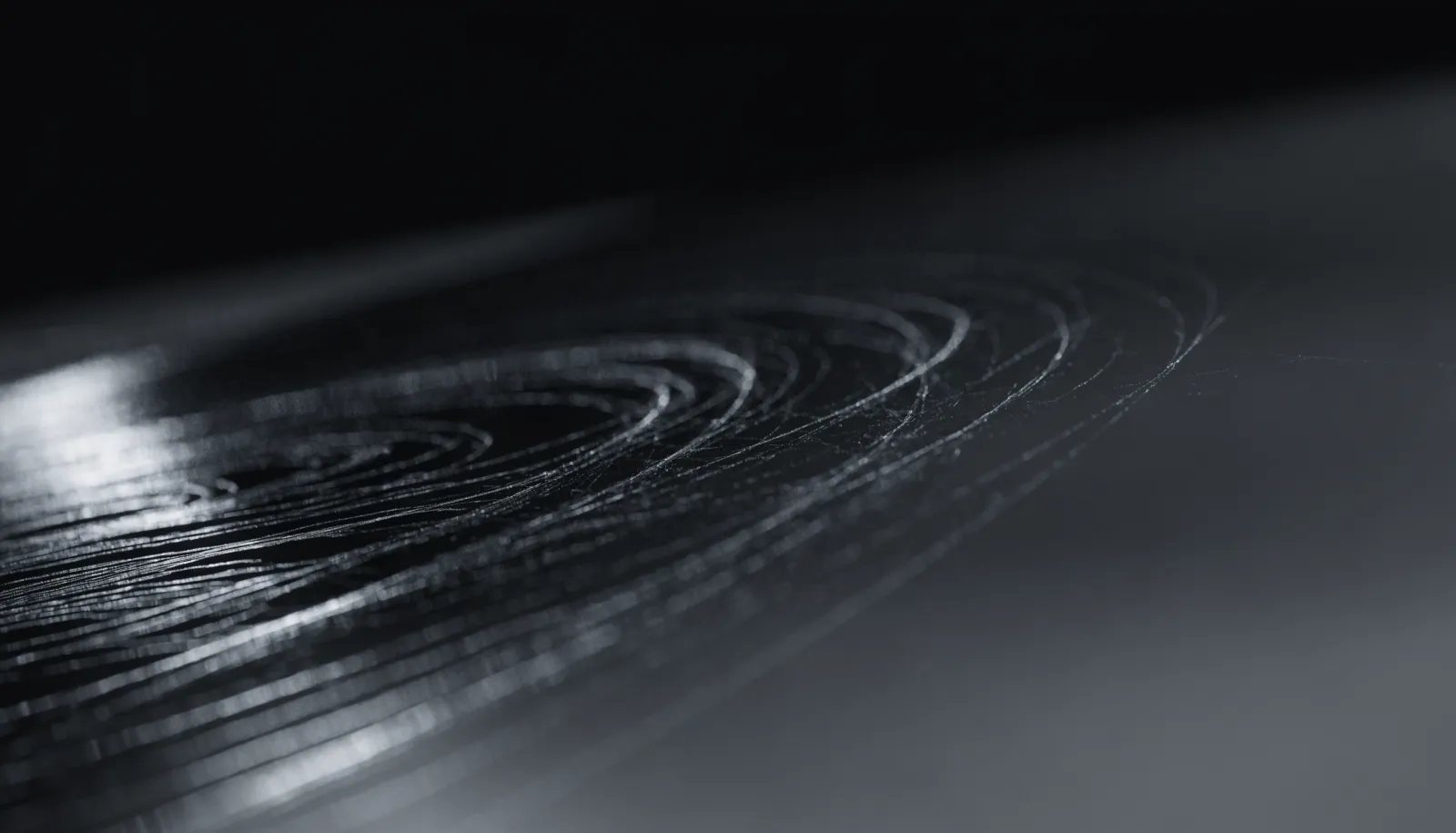
When the clear coat above that basecoat has fine scratches running through it, each scratch interrupts the reflection pattern. The scratch scatters light differently than the surrounding surface, and because the metallic flake underneath is already throwing light in multiple directions, the scratch catches and amplifies that contrast. On a mid-tone silver, this creates a web of fine lines that reads as dullness or haze. On a darker charcoal metallic, the contrast is even sharper because the dark background makes the light-catching scratches look brighter by comparison.
The clear coat itself is the layer being corrected. The metallic flake below it is untouched by the polishing process. What paint correction does is level the clear coat surface so that light reflects cleanly and uniformly off the metallic layer beneath.
Where dark silver cars typically pick up damage
Automatic tunnel washes are the primary culprit on most daily drivers we see. The brushes and microfiber curtains in those systems deposit light scratches in arcing patterns that follow the machine’s rotation, which is why swirl marks in a circular pattern are sometimes called wash marring. On dark silver paint, a car that goes through a brush wash weekly for two years will typically show heavy swirling across the roof, hood, and trunk lid, which are the flat horizontal panels that get the most direct contact.
Hand washing with the wrong technique causes similar damage. A single wash mitt that picked up grit from the lower rocker panel, then continued up to the hood, can leave a row of fine scratches in a single wipe. Drying with a rough or dirty towel is another common cause. We also see damage from improper clay bar use, from detailers who machine polish without proper pad speed control, and from dealerships that prep cars with high-speed rotary buffers and leave holograms in the finish.
Road-going debris contributes as well, particularly on the lower sections of the doors, bumpers, and rocker panels. These tend to be deeper isolated scratches rather than the fine swirl patterns seen higher on the vehicle.
What the correction process looks like on these finishes
Dark silver and granite metallic finishes vary significantly in clear coat hardness depending on the manufacturer. German automakers, particularly BMW, Mercedes-Benz, and Audi, are known for applying relatively hard clear coats. Japanese and Korean manufacturers tend to run softer. This matters because the polishing process has to be calibrated to the actual hardness of the surface.
Before any machine touches the paint, we take paint thickness readings across every panel. This tells us how much clear coat is present and gives us a baseline for what can safely be removed. Paint correction removes a thin layer of clear coat by abrasion. If the readings show that a panel has already been cut significantly, that limits our options.
We then use a high-intensity light source, typically a halogen or LED inspection lamp, to map the defects across the vehicle’s surface. This is where the extent of the damage becomes clear, and it is often more than owners expect. The same defects are visible during this inspection that will be visible after any correction work is done if they are not addressed. Skipping this step leads to surprises.
From there, we select a combination of machine, pad, and compound or polish that matches the defect depth and the clear coat hardness. A heavily swirled soft clear coat may respond to a light polish on a foam pad. A German hard clear with deep holograms from a previous shop may require a more aggressive compound on a cutting pad before refining down to a finishing polish. We work in small sections, check the results under the inspection light, and adjust the process if needed. The goal on dark silver finishes is to reach a point where the metallic flake reads as a clean, uniform field of light under direct illumination rather than a fractured web of reflections.
If you want to see how this inspection process guides every stage of the work, our paint correction service page describes the approach in detail.
Protecting the results after correction
Paint correction on dark metallic paint is a significant time investment. A vehicle with moderate to heavy swirling across all panels can take a full day or more of careful machine work. Allowing that result to degrade back to its original condition within a few months through automatic car washes or poor wash technique defeats the purpose.
This is why most owners who go through the expense and time of a full correction on a dark silver car also add a protective layer over the finish. A professional-grade ceramic coating bonds to the clear coat and creates a harder, more slick surface that is more resistant to light scratching during subsequent washes. It also makes maintenance washing easier, since contaminants release more readily from the surface. The coating does not prevent all scratching, but it meaningfully reduces the rate at which swirl marks accumulate.
For owners who park in high-risk environments, drive on North Houston highways with heavy road debris, or want a more durable mechanical barrier, paint protection film over the corrected surface is also an option for high-impact zones like the hood and front bumper.
What correction cannot address
There are limits. Deep scratches that penetrate through the clear coat and into the basecoat are not polishable. Polishing cuts the surface flat, and if a scratch goes below the surface, leveling the surrounding paint does not fill the scratch. These defects require touch-up paint or spot repair, and results vary depending on how well the touch-up matches the surrounding metallic.
Orange peel, the textured surface that comes from the factory spray application, is a separate category. It is not a defect in the traditional sense but a texture in the clear coat surface. Removing significant orange peel requires wet sanding followed by polishing, which is more aggressive than standard swirl removal. Not every customer wants to go that far, and not every panel warrants it.
Oxidation on a dark silver car is relatively uncommon compared to lighter colors, but it does appear on vehicles that have been parked outdoors for years without any protection. If the clear coat has begun to fail structurally, polishing can sometimes expose the failure rather than correct it. Paint thickness readings and a visual inspection of the finish before any work begins are the only reliable way to identify this before it becomes a problem mid-job.
Making the call
If you are looking at a dark silver or granite metallic vehicle and you can see swirling or haze in direct sunlight, paint correction is the appropriate first step before any coating or protection goes on. Applying ceramic coating over marred paint seals those defects in and makes them permanent. Getting the surface right before protecting it is always the correct sequence.
If you have questions about what your specific vehicle would require, call us at (936) 292-6056 and we can talk through what we typically see on your make and model before you schedule anything.
Dark metallic finishes reward proper care more visibly than almost any other color, and the difference between a corrected dark silver hood and a swirled one is not subtle. It is either right or it is not, and under a direct light source there is no middle ground.