Why professional lighting is the foundation of paint correction
Paint correction is often described in terms of compounds, polishes, and machine polishers. Those are the tools. What actually drives the outcome is something less discussed: how well a technician can see the surface before, during, and after the work. Defects that are invisible under a cloudy sky or a single overhead fluorescent become obvious under the right light source at the right angle. Without that visibility, a shop can spend hours polishing and still deliver a finish with holograms, buffer trails, or untouched scratches.
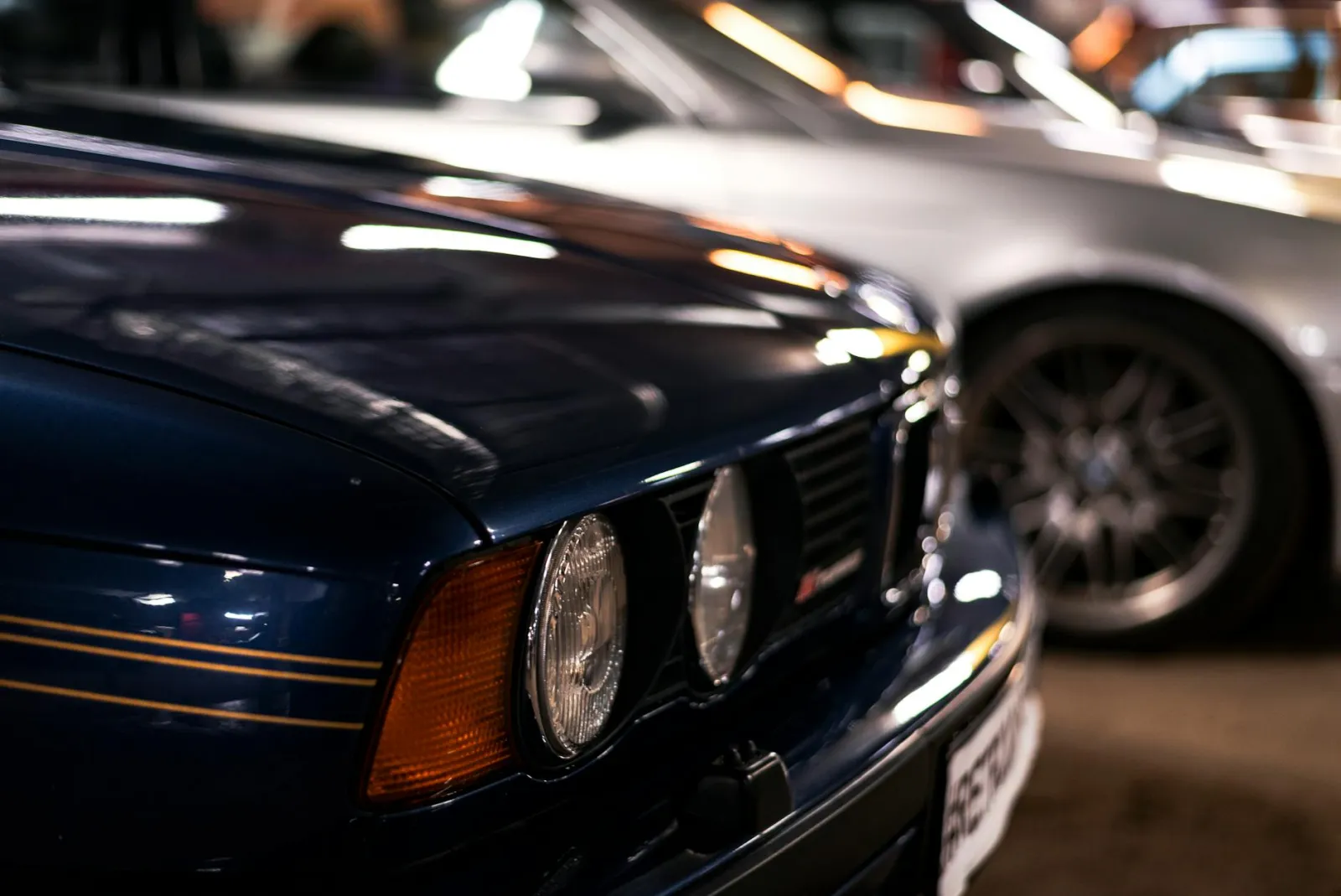
This matters especially for vehicles with darker paint — black, dark blue, graphite, deep red — where the clear coat acts almost like a mirror. Every pass of a polishing pad either improves or degrades that mirror. The only way to know which is happening in real time is to work under lighting that reveals it. At EuroLuxe Detailing, the climate-controlled installation bay is equipped with multiple light sources specifically for this reason. It is not an aesthetic detail about the shop. It is a functional requirement of doing the work correctly.
Understanding how inspecting and correcting under proper lighting works helps you evaluate any estimate you receive and understand why correction jobs quoted in a parking lot or with a single walk-around are almost always incomplete.
What different defects look like under proper inspection lighting
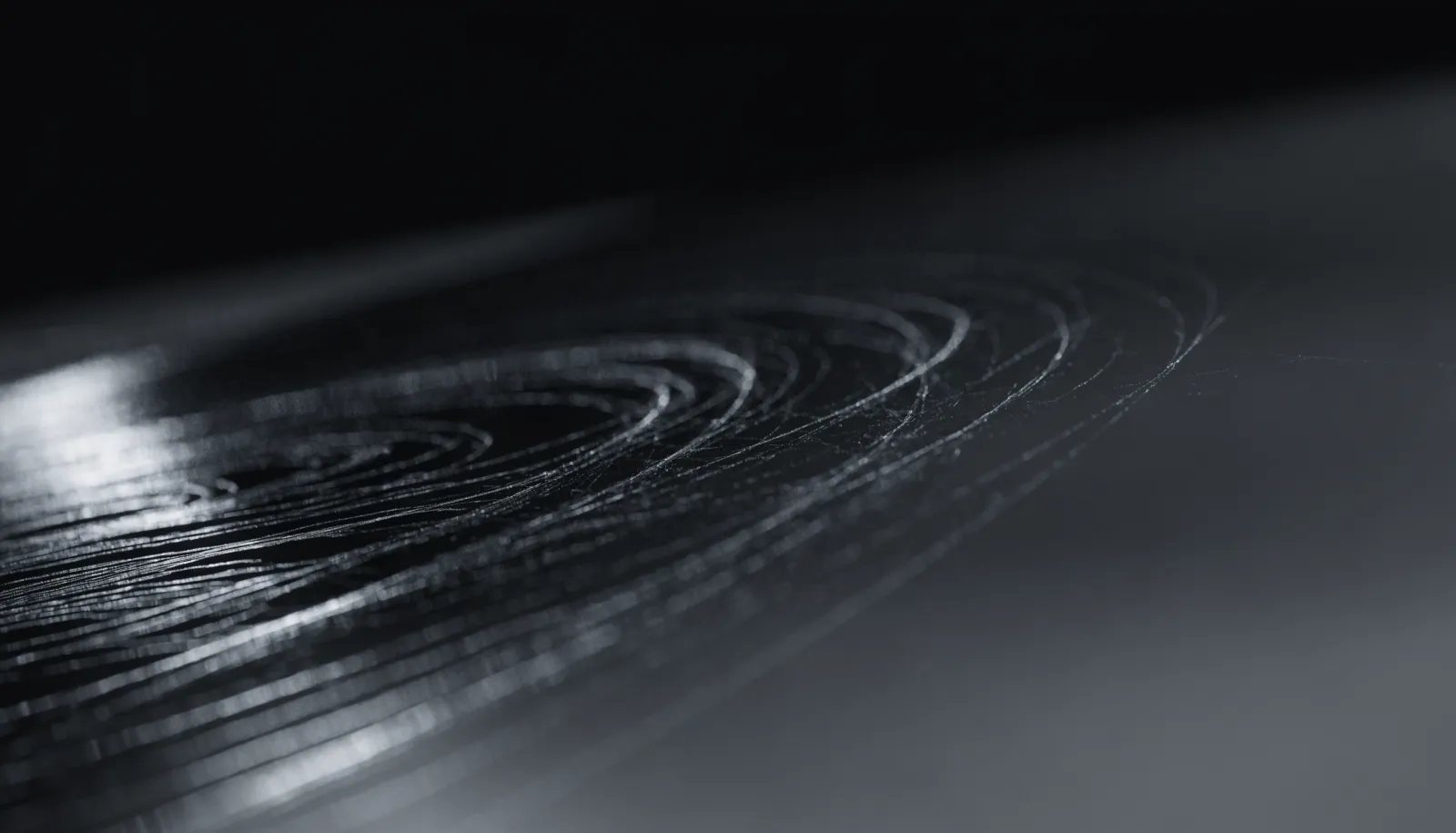
Not all paint defects reflect light the same way, which is why no single light source catches everything. Random isolated scratches — the kind that come from a shopping cart or a parking lot encounter — show up clearly under a direct, concentrated beam held perpendicular to the panel. Swirl marks, by contrast, appear most dramatically when the light source is angled or when you rotate around it, because they are circular patterns that reflect differently depending on your position relative to the source.
Holograms, which are spiral or arc-shaped patterns left by rotary polishers running at the wrong speed or with the wrong pad, appear almost exclusively under indirect or diffused lighting. A shop that only inspects under direct light can produce a hologram-covered finish that looks clean until the car sits under an overcast sky or fluorescent parking garage lights. The customer drives away satisfied and notices the problem three days later in a different setting.
Buffer trails — long linear marks from a polisher that traveled across a panel in a straight line without proper overlapping passes — often appear under the same diffused light conditions as holograms. Good inspection lighting in a professional bay will include both direct and indirect sources, and a trained technician will rotate around each panel multiple times before calling a section complete.
Why the work environment and lighting are inseparable
Outdoor correction work faces a fundamental problem: the light source moves. The sun changes position throughout the day, which means conditions at 9 a.m. are completely different from conditions at 2 p.m. Direct sunlight is also problematic because its intensity can obscure fine-line marring that becomes visible once the vehicle moves indoors. A shop that does correction in a driveway or an open bay with mixed natural light is working with unreliable information.
A climate-controlled indoor environment solves several problems at once. Temperature and humidity affect how compounds and polishes cut and finish — extremes in either direction change product behavior, which changes how the pad interacts with the clear coat. An enclosed bay also eliminates airborne contamination: pollen, dust, and debris settling onto a freshly polished panel create new micro-scratches in real time if the work is done outdoors.
Fixed, consistent artificial lighting in a dedicated bay means the technician is working with the same visual information from the first panel to the last. There is no chasing the sun, no moment in the afternoon where shadows fall across a door and the work has to pause. The environment is controlled so the only variable is the paint itself.
How a professional reads a panel before touching it
Before any correction begins on a vehicle at EuroLuxe, the inspection process involves more than a visual scan. A paint thickness gauge is used on every panel to establish baseline readings. Clear coat depth determines how aggressively correction can proceed. A panel that shows significantly lower readings than its neighbors has likely been cut before — either by a previous correction job, a repaint, or a collision repair that was not properly documented. Correcting into thin clear coat without knowing it is there risks burning through, which turns a cosmetic problem into a structural one.
Once thickness is established, the lighting inspection begins. The technician works systematically, panel by panel, using a combination of a focused LED raking light and broader diffused sources. Notes are taken mentally or physically on the defect map: which areas have heavy swirling, where isolated deeper scratches are present, whether there is any orange peel that the customer wants addressed, and whether any areas show holograms from previous polish work.
This step informs which compounds and pads will be used, in what sequence, and how many passes each area needs. Skipping this step and going straight to polishing is how shops create new problems while solving old ones.
What the finishing stages reveal that cutting stages hide
Paint correction typically moves through stages: a heavier cut compound removes significant defects and levels the clear coat, followed by a finer polish that refines the surface, followed by a finishing polish that removes any micro-marring left by the earlier stages. Each stage can either improve or introduce defects depending on product selection, pad selection, machine speed, and technique.
The finishing stage is where lighting becomes most critical. A paint surface that looks complete after the polishing stage may still carry fine-line swirls or light holograms from the rotary or dual-action machine. These are only visible under specific lighting conditions. A technician who does not reinspect under multiple light sources after each stage has no reliable way to know whether the surface is actually finished.
The final inspection before a vehicle receives a protective coating — whether that is a ceramic coating or another form of protection — is the last chance to identify and address anything the correction left behind. A coating locks in whatever is on the surface. If there are residual defects underneath, they will be preserved and magnified by the gloss of the coating above them.
What to look for when evaluating a correction estimate
When you are comparing shops and getting estimates for paint correction, a few questions separate shops that do the work correctly from those that do not. Ask where the work will be performed. If the answer is an outdoor lot or an open bay with no controlled lighting, that is a meaningful limitation. Ask whether paint thickness will be measured before work starts. If the answer is no, the shop has no data to guide its aggressiveness on any given panel.
Ask what the inspection process looks like between stages. A shop that does not reinspect under varied lighting between each compound or polish stage is guessing at its results. Ask how holograms are checked for before the job is considered complete. If the answer is vague, the shop has likely delivered hologram-laden finishes to customers who did not notice until later.
None of these questions are adversarial. A shop that knows what it is doing will answer them specifically and without hesitation because the answers describe a process the shop is proud of, not a shortcoming it is trying to avoid.
If you have questions about what a correction assessment involves for your specific vehicle, call EuroLuxe Detailing at (936) 292-6056 or stop by the shop at 11701 Holderrieth Rd in Tomball. The inspection process is straightforward, and a conversation about what your paint actually needs is a better starting point than a quote written on a guess.
Paint correction done without proper lighting and a disciplined inspection process is largely cosmetic theater — it looks like the work was done without producing the result the work is supposed to deliver. The environment the work happens in is not incidental to quality. It is part of what quality means.