Swirl Marks vs. Scratches: What's the Difference and What Can Be Fixed
Most people use “swirl marks” and “scratches” interchangeably. They’re not the same thing — they form differently, sit at different depths, and respond to different correction approaches. Misunderstanding the difference is how people end up paying for correction work that doesn’t fix the actual problem, or worse, assuming damage is unfixable when it isn’t.
Here’s a clear breakdown of what each is, how to identify it, and what paint correction can and can’t do about it.
What Swirl Marks Actually Are
Swirl marks are fine, circular scratches in the clear coat. They’re typically too small to feel with your fingertip — you can only see them when light hits the surface at an angle. In direct sunlight or under a bright LED, they show up as overlapping circular patterns, especially visible on dark-colored vehicles.
The root cause is abrasive contact that moves in arcs rather than straight lines. Automatic car wash brushes create them aggressively — the brushes spin and drag grit across the paint in circles. Improper hand-washing technique (circular motions with a dirty mitt, a low-quality sponge, or not enough lubrication) does the same thing at a smaller scale.
Drying with a rough towel, wiping off dust or light debris without proper lubrication, and improper machine polishing technique all contribute. Even well-intentioned care causes swirl marks if the technique or materials are wrong.
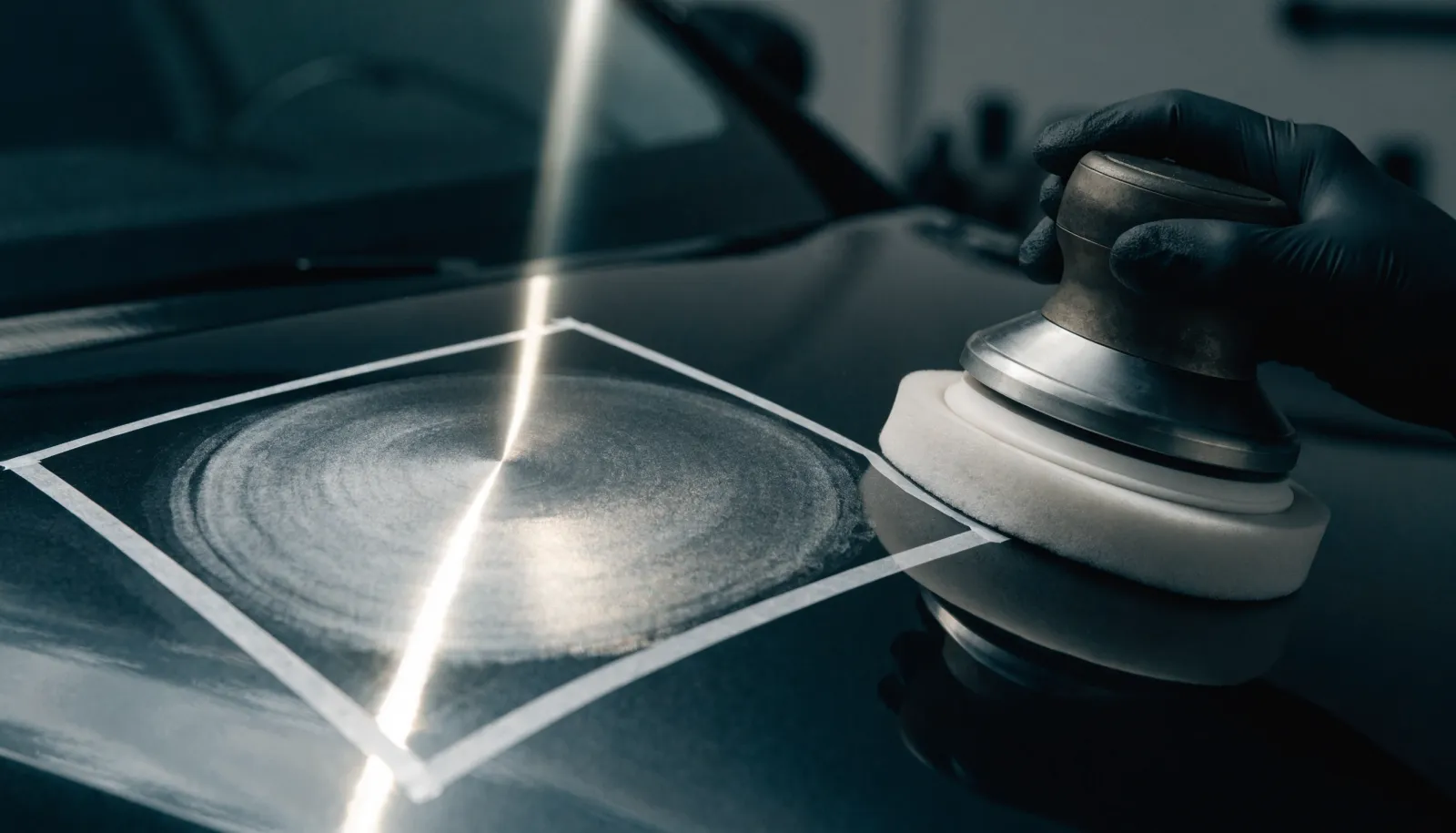
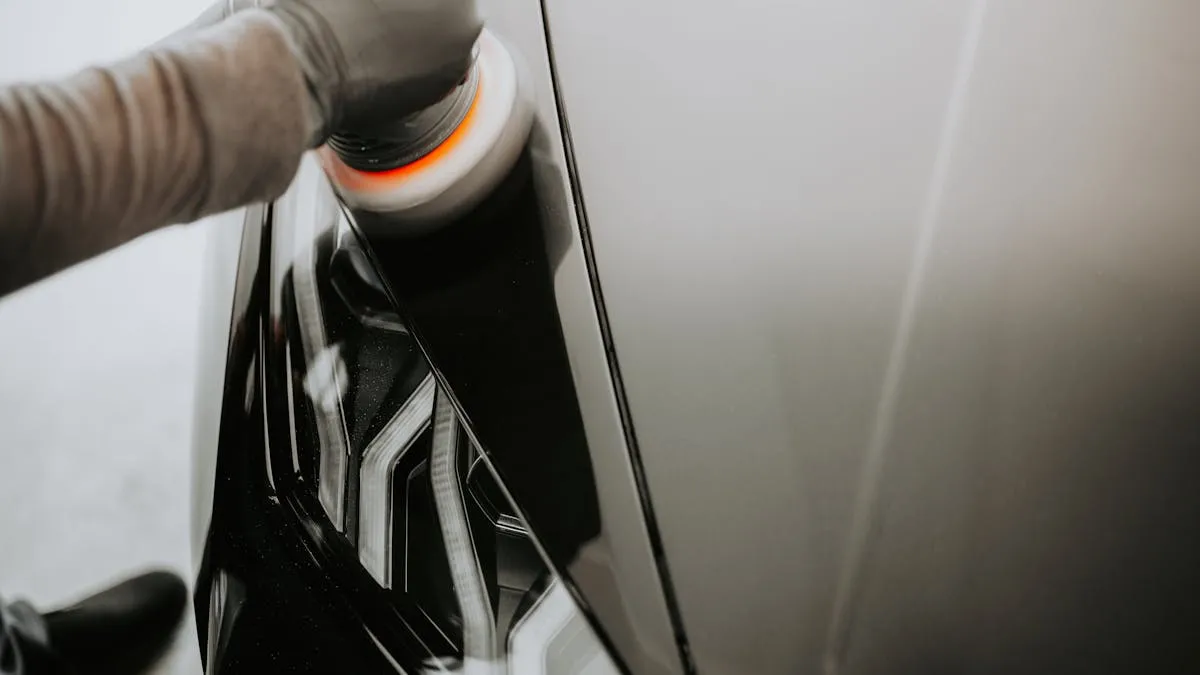
Because swirl marks are shallow — typically confined to the upper portion of the clear coat — they’re usually fully correctable with machine polishing. A skilled detailer with the right pad and compound can level the clear coat around the scratches and remove them entirely in most cases.
What Scratches Are
A scratch is a single-direction mark that cuts deeper into the clear coat — or in worse cases, through the clear coat entirely into the base coat or primer. Scratches come from harder contact: keys, branches, cart dings, rocks, a belt buckle dragging across the door.
The first test for any scratch is the fingernail check. Run your fingernail lightly across the mark. If your nail catches — if it drops into the scratch — it’s a significant cut. If your nail slides across without catching, the scratch is likely shallow and in the clear coat only.
Clear coat scratches can often be corrected with machine polishing, the same approach as swirl marks but typically with a more aggressive cutting compound. The goal is to level the surrounding clear coat down to the bottom of the scratch until it disappears — or at minimum, becomes shallow enough that it’s no longer visible.
Deep scratches that expose base coat (the colored layer under the clear) are a different situation. You can see them clearly by looking at the scratch in angled light — instead of a bright white mark, you’ll see the color change to the base coat color, or even a darker gray/brown if it’s hit primer. These cannot be polished out. The only fix is touch-up paint or a respray, which is bodywork territory, not detailing.
Clear Coat Depth: Why It Matters
Modern automotive clear coat is roughly 100–200 microns thick depending on the vehicle and whether it’s factory paint or a repaint. Machine polishing removes a thin layer of clear coat to level out the surface. Remove too much and you burn through the clear coat — at which point the paint becomes dull, hazy, and permanently damaged. You can’t polish on clear coat that isn’t there.
This is why a trained detailer measures paint thickness before and during correction work. A paint thickness gauge tells you how much clear coat is remaining and how aggressive you can be with correction without risking burn-through. It’s also how you diagnose whether a vehicle has already been repainted (repaints are often thicker on certain panels) or has had previous correction work that reduced the available clear coat significantly.
Vehicles with thin clear coat from factory, or older vehicles that have already been corrected multiple times, may have limited options. A good shop will be honest with you about what’s achievable and won’t push correction work on a vehicle where there’s insufficient clear coat to work safely.
What an Untrained Eye Misses
A few things that regularly surprise people when they actually look carefully at their paint:
Water spot etching. Hard water spots from sprinklers or rainwater evaporating on a hot surface leave mineral deposits that bond to the clear coat and eventually etch into it. Lighter spots can be polished out. Deep etching creates permanent pits that correction can minimize but not eliminate.
Buffer trails. If someone polished your car incorrectly — with too much pressure, the wrong pad, or moving too slowly — they may have created hologram marks or heat-induced hazing. These show up as fine circular or spiral patterns distinct from swirl marks and often require starting the correction process over with the right technique.
Random deep scratches among light swirls. Swirl mark correction won’t touch a deep scratch. If you have both present (common), the deep scratches will remain visible after polishing unless specifically addressed. A thorough inspection under proper lighting before quoting the job is how you catch this.
The difference between surface contamination and actual damage. Iron fallout and bonded contaminants on the surface can look like paint damage but will come off with proper decontamination. Running a clay bar or iron decontamination treatment before assessing the actual paint condition prevents misdiagnosis.
Getting an Accurate Assessment
The only way to get an accurate picture of what’s going on with your paint is a proper inspection under good lighting — not in direct sunlight, where everything washes out. A trained eye with a paint thickness gauge, good LED lighting, and an actual understanding of what they’re looking at will give you a real read on what’s correctable, what isn’t, and what it’ll take.
We do this for every vehicle that comes in for a correction consult. Call us at 936-292-6056 or drop by in Tomball and we’ll walk through the paint condition with you before committing to anything.
Keep Your Vehicle Looking Its Best
What Is Paint Correction?
Paint Correction Before Ceramic Coating
Clay Bar Treatment Explained